This is my #1 selling soap
If your soap doesn't smell like a campfire crossed with a Viking longship, you're doing it wrong.
Midnight-black, seriously smoky, and not messing around: this is REAL 30% Norwegian pine tar soap.
Most pine tar soaps use 10–20% pine tar. Ours is 30% — real, handmade Norwegian pine tar, which is expensive, hard to source, and famously difficult to work with in both cold- and hot-process soapmaking.
I do it anyway, because the result is worth it.
• Key ingredients: Norwegian Pine Tar, Activated Hardwood Charcoal
• Scent: Smoky, woody, charred, tar-forward — ancient and rugged
• Format: Hot-process bar soap, handmade in small batches
• The lather runs jet black — that's the charcoal and real pine tar talking. It rinses clean without staining the skin.
• One of my most requested bars — just read the feedback!
THE LORE
Pine tar has been made and used by people for centuries for far more than soap.
Historical records and traditional preparations describe pine tar being used for everything from preserving wood and waterproofing ships to inclusion in old-fashioned topical preparations for a variety of skin complaints. Even today, cultures around the world continue to use pine tar for its unmistakable scent and traditional medicinal benefits.
The story of pine tar itself reaches deep into European history. By the Viking Age, pine tar was being produced by slowly heating resinous pine wood and roots with limited oxygen, drawing out the thick, dark tar that could then be collected and put to work.
Celts used tar and resinous materials for practical purposes ranging from tools and weapons to traditional preparations. The Romans knew its value. Medieval Europeans used it extensively. And later, pine tar became indispensable during the Age of Sail, helping protect the hulls, ropes, and rigging of wooden ships against the elements.
Today, I put an extraordinary amount of the real stuff into a bar of soap.
It smells like history.
This is my #1 selling soap
If your soap doesn't smell like a campfire crossed with a Viking longship, you're doing it wrong.
Midnight-black, seriously smoky, and not messing around: this is REAL 30% Norwegian pine tar soap.
Most pine tar soaps use 10–20% pine tar. Ours is 30% — real, handmade Norwegian pine tar, which is expensive, hard to source, and famously difficult to work with in both cold- and hot-process soapmaking.
I do it anyway, because the result is worth it.
• Key ingredients: Norwegian Pine Tar, Activated Hardwood Charcoal
• Scent: Smoky, woody, charred, tar-forward — ancient and rugged
• Format: Hot-process bar soap, handmade in small batches
• The lather runs jet black — that's the charcoal and real pine tar talking. It rinses clean without staining the skin.
• One of my most requested bars — just read the feedback!
THE LORE
Pine tar has been made and used by people for centuries for far more than soap.
Historical records and traditional preparations describe pine tar being used for everything from preserving wood and waterproofing ships to inclusion in old-fashioned topical preparations for a variety of skin complaints. Even today, cultures around the world continue to use pine tar for its unmistakable scent and traditional medicinal benefits.
The story of pine tar itself reaches deep into European history. By the Viking Age, pine tar was being produced by slowly heating resinous pine wood and roots with limited oxygen, drawing out the thick, dark tar that could then be collected and put to work.
Celts used tar and resinous materials for practical purposes ranging from tools and weapons to traditional preparations. The Romans knew its value. Medieval Europeans used it extensively. And later, pine tar became indispensable during the Age of Sail, helping protect the hulls, ropes, and rigging of wooden ships against the elements.
Today, I put an extraordinary amount of the real stuff into a bar of soap.
It smells like history.

 Image 1 of 7
 Image 2 of 7
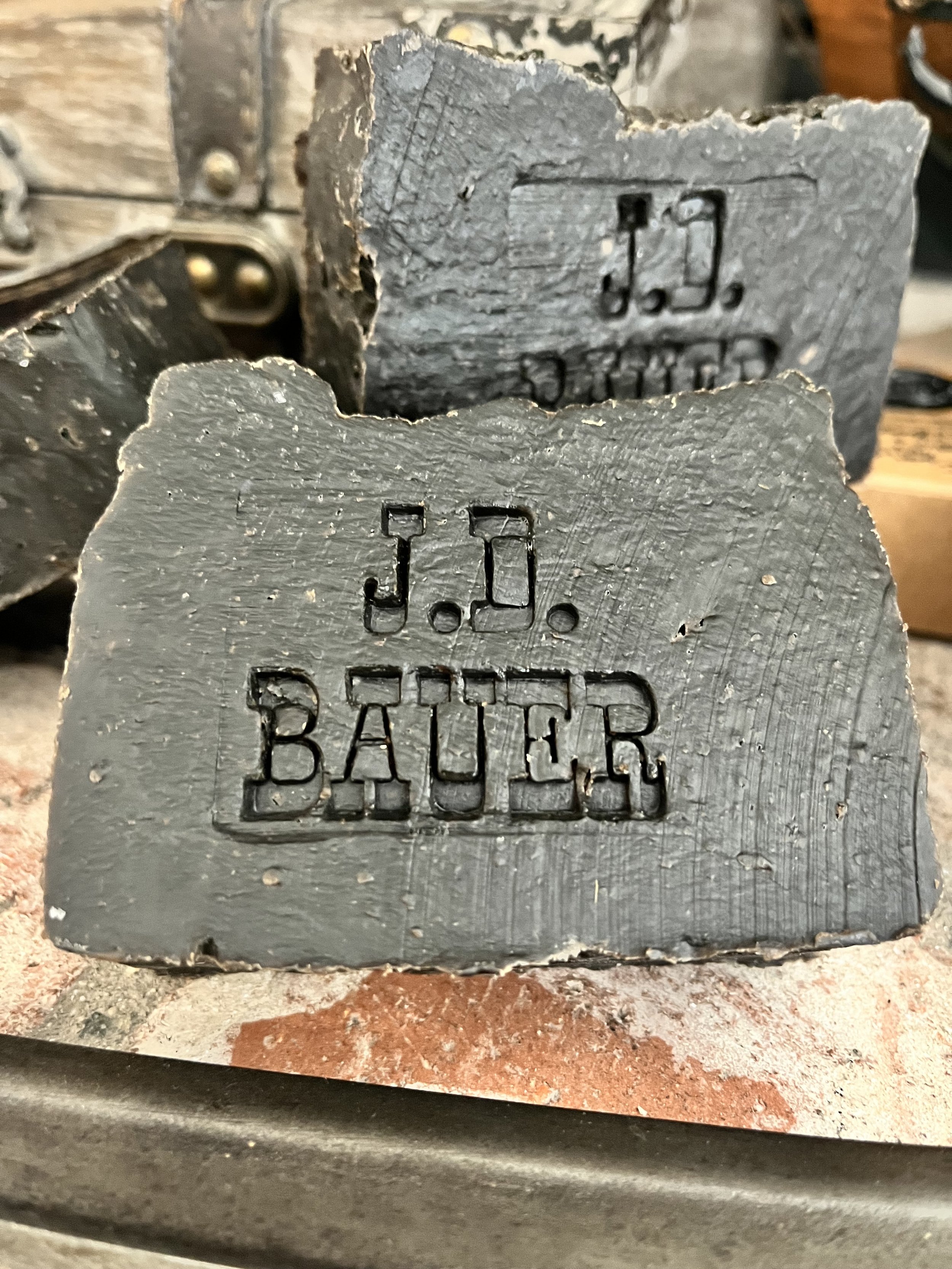 Image 3 of 7
 Image 4 of 7
 Image 5 of 7
 Image 6 of 7
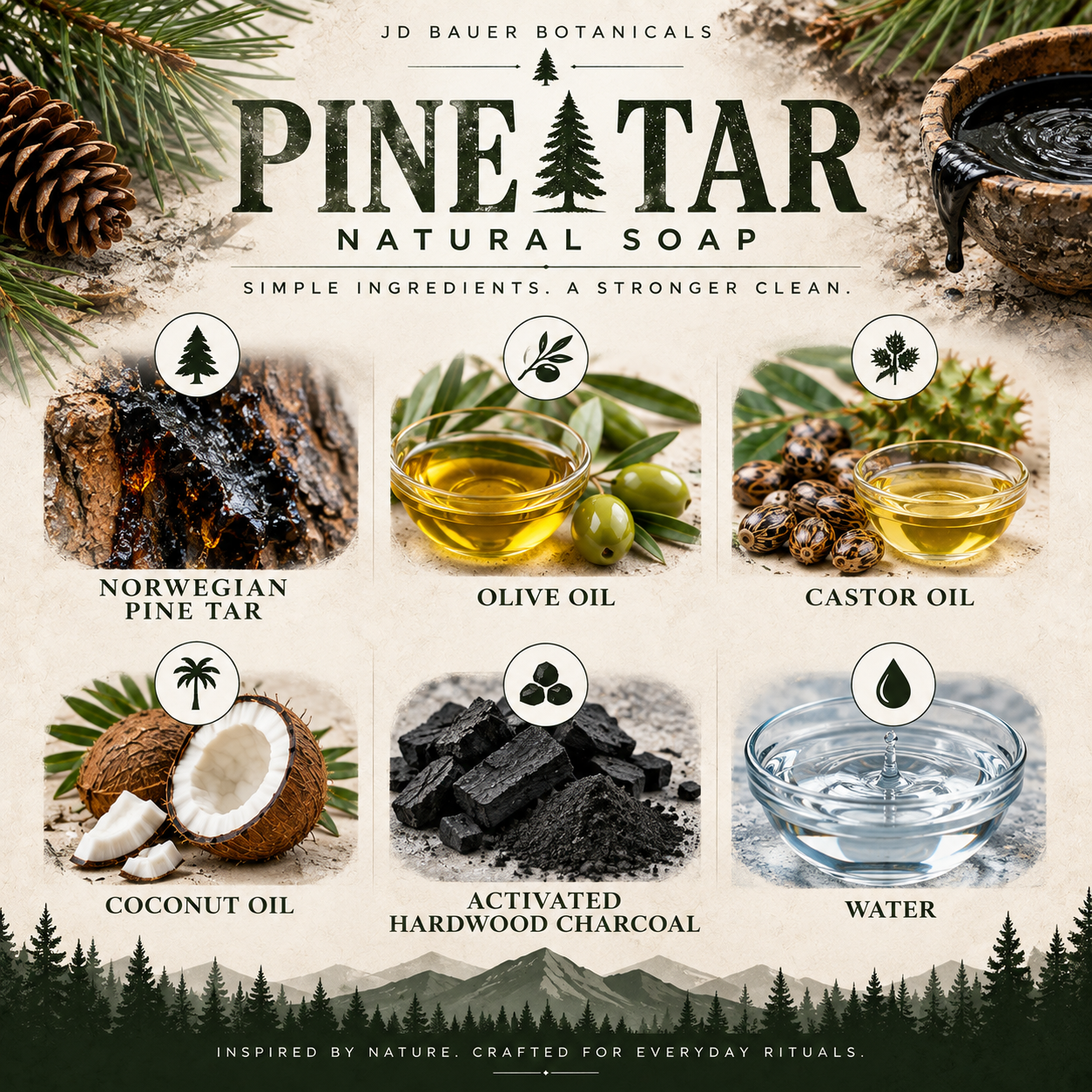 Image 7 of 7