
 Image 1 of 5
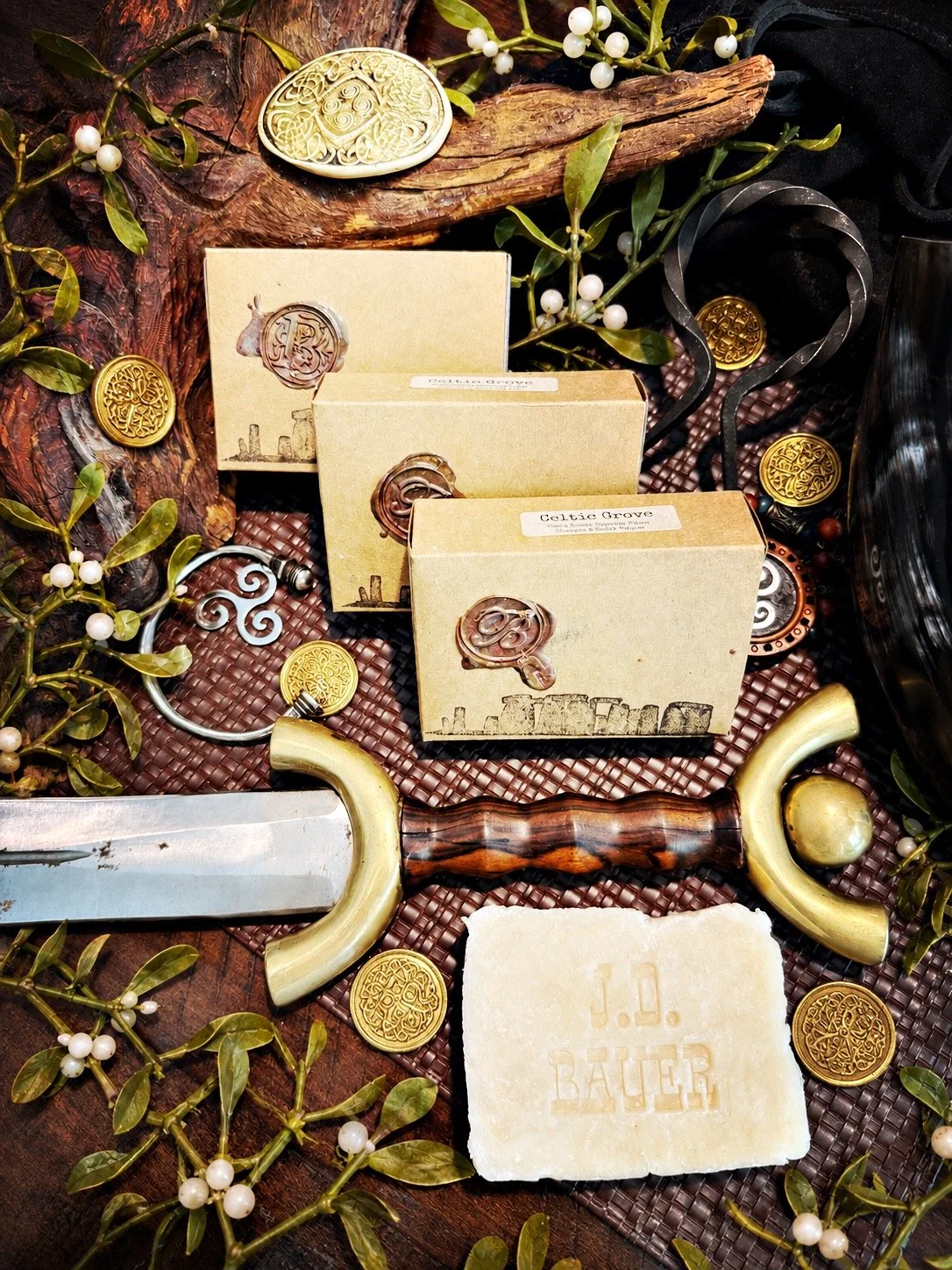 Image 2 of 5
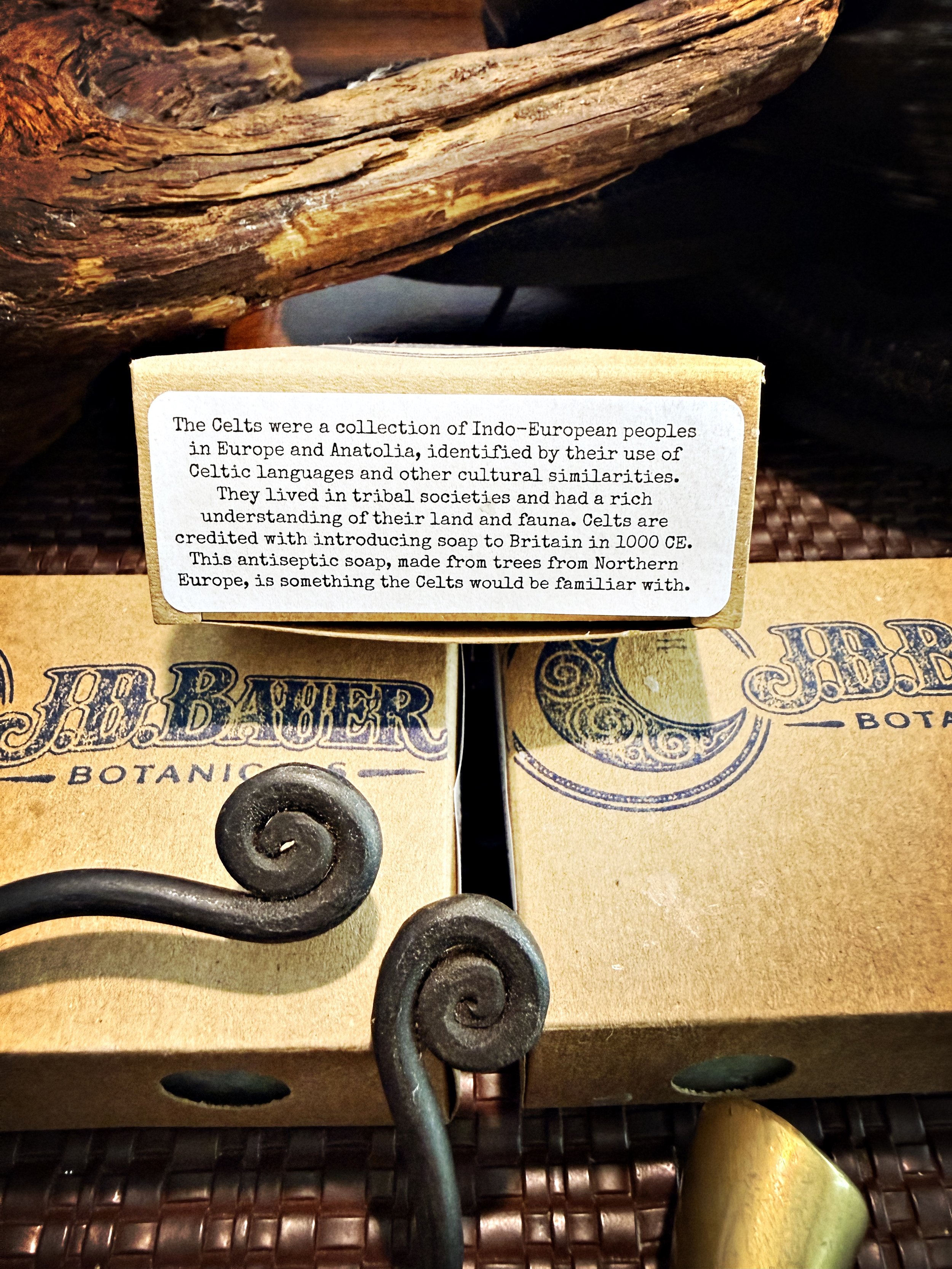 Image 3 of 5
 Image 4 of 5
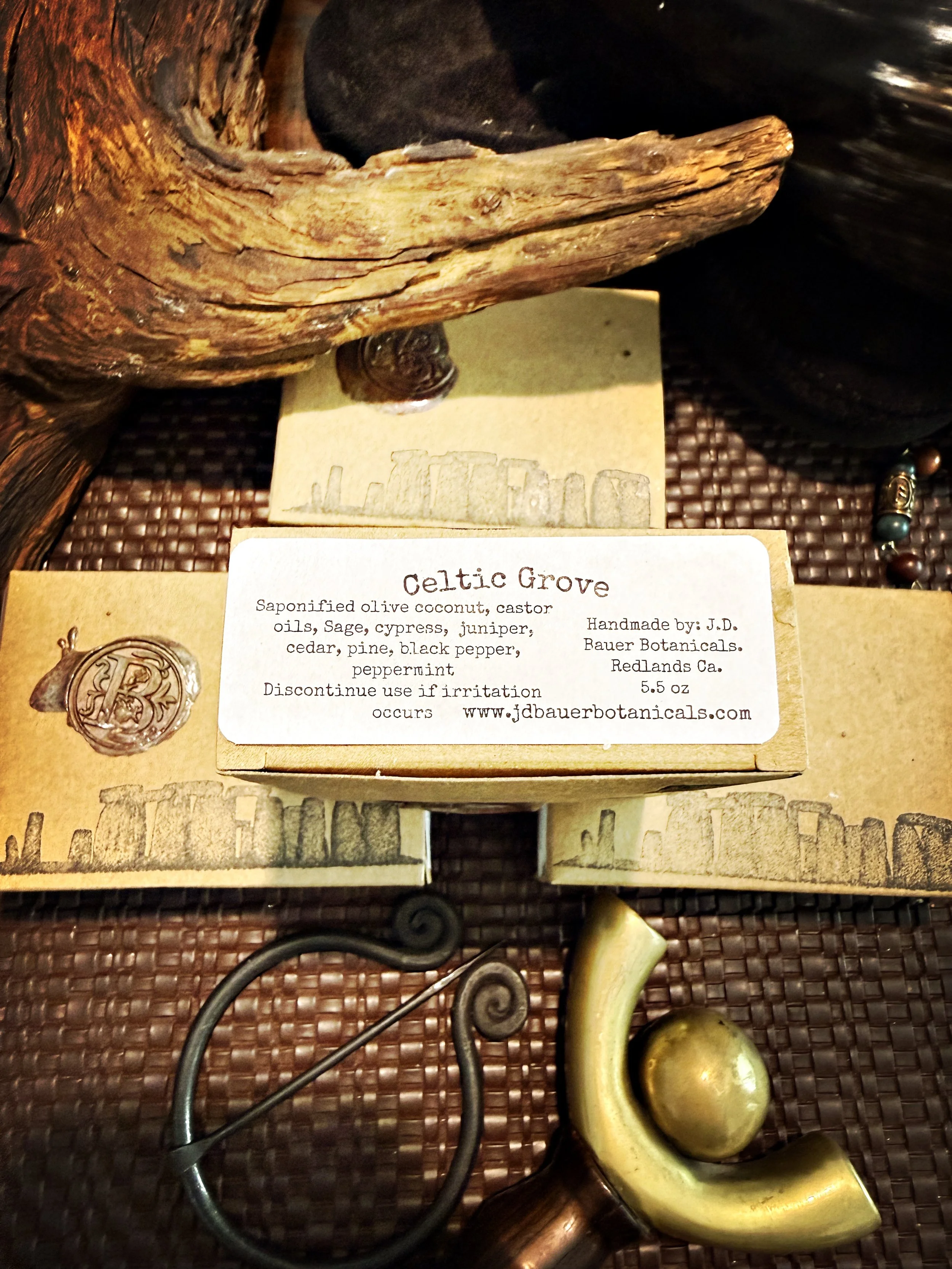 Image 5 of 5
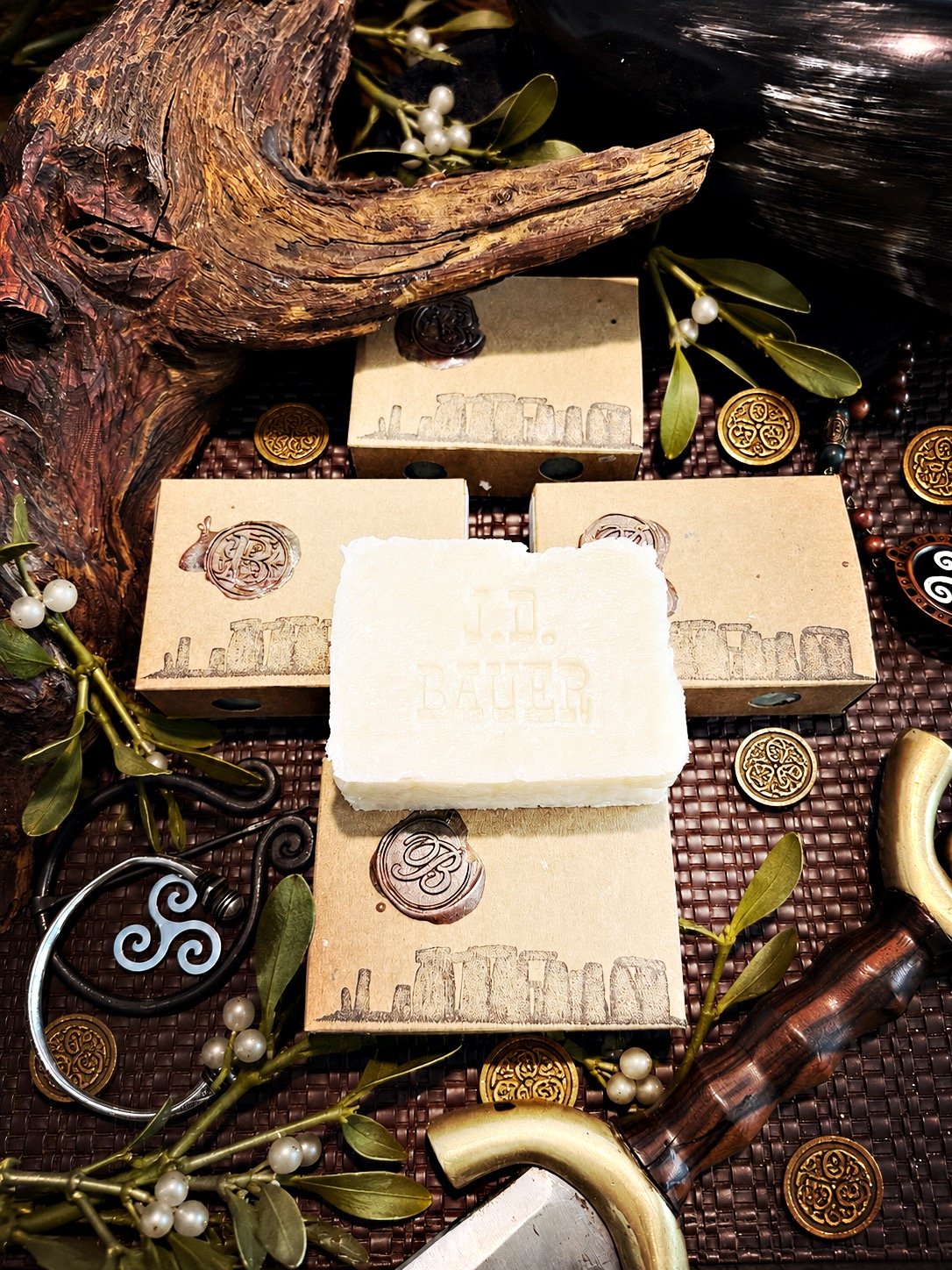
Celtic Grove – Sage, Cypress, Cedar, Juniper, Pine, Peppermint & Black Pepper
Close your eyes and you're standing in a forest right after the rain — wet earth, crushed evergreen, cool mountain air. Celtic Grove is my love letter to the ancient woodlands of Gaul.
• Key ingredients: Cedar, Cypress, Juniper, Pine, Peppermint, Black Pepper
• Scent: woodsy, herbal, green, earthy — with a warm, peppery finish
• Format: hot-process bar soap, handmade in small batches
THE LORE
The Celts were a diverse group of ancient peoples who lived across much of Europe, particularly in Ireland, Britain, France and Central Europe. Though they were never a single unified nation, Celtic communities shared related languages, artistic traditions and a deep connection to nature, using local herbs and plants in everyday life, ceremony and personal care.
Nearly two thousand years ago, Roman writers were already describing a cleansing preparation used by the Celtic peoples of Gaul. Pliny the Elder, writing in the first century AD, flatly credited them with inventing soap: "Soap… [was] an invention of the Gauls," made from fat and the ash of trees (Natural History, Book XXVIII, §191).
Celtic Grove is a modern tribute to that idea rather than a literal reconstruction — cedar, pine, juniper and cypress bring the character of the forest, while black pepper and peppermint add warmth and a cooling, invigorating snap. It's fitting: Pliny described Gallic soap as coming straight from the forest floor, and so does this bar.
Celtic Grove – Sage, Cypress, Cedar, Juniper, Pine, Peppermint & Black Pepper
Close your eyes and you're standing in a forest right after the rain — wet earth, crushed evergreen, cool mountain air. Celtic Grove is my love letter to the ancient woodlands of Gaul.
• Key ingredients: Cedar, Cypress, Juniper, Pine, Peppermint, Black Pepper
• Scent: woodsy, herbal, green, earthy — with a warm, peppery finish
• Format: hot-process bar soap, handmade in small batches
THE LORE
The Celts were a diverse group of ancient peoples who lived across much of Europe, particularly in Ireland, Britain, France and Central Europe. Though they were never a single unified nation, Celtic communities shared related languages, artistic traditions and a deep connection to nature, using local herbs and plants in everyday life, ceremony and personal care.
Nearly two thousand years ago, Roman writers were already describing a cleansing preparation used by the Celtic peoples of Gaul. Pliny the Elder, writing in the first century AD, flatly credited them with inventing soap: "Soap… [was] an invention of the Gauls," made from fat and the ash of trees (Natural History, Book XXVIII, §191).
Celtic Grove is a modern tribute to that idea rather than a literal reconstruction — cedar, pine, juniper and cypress bring the character of the forest, while black pepper and peppermint add warmth and a cooling, invigorating snap. It's fitting: Pliny described Gallic soap as coming straight from the forest floor, and so does this bar.